


Try adjusting your search or filter options.
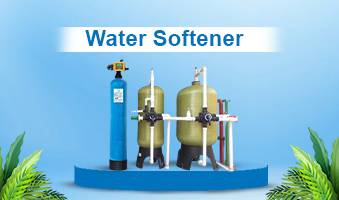
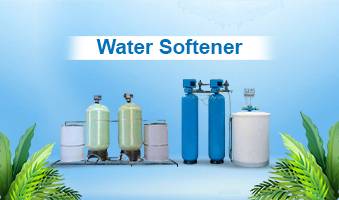
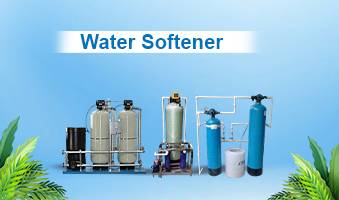
Hard water quietly causes trouble all over the house. White deposits build up on taps, showerheads and glass, soap does not lather well, and scale collects inside geysers and washing machines. A suitable water softener reduces calcium and magnesium in the supply, so these problems become easier to manage.
At RO Service & Sales, you can explore water softening solutions for flats, apartments, independent houses and villas, along with installation and service support for long-term use.
No two households have the same water needs. Family size, number of bathrooms, daily usage and hardness level all affect the capacity you need. A suitable system can be considered for:
If you are comparing water softeners in India, choose by actual water condition and requirement, not by price alone.
Hard water leaves mineral deposits when it dries or gets heated. Over time, these deposits become visible on fittings and build up inside equipment. A properly sized softener helps with the following.
Softening reduces the hardness that causes mineral scale in pipes, taps, shower fittings and appliances.
Hard water spots are hard to remove. Softened water reduces this buildup, so fittings stay cleaner for longer.
Scale collects wherever water is heated or used regularly. Managing hardness helps reduce scale accumulation in these appliances.
Hard water works against soap. Softer water lets cleaning products perform better, so you may need less of them.
With less mineral deposit on surfaces, routine cleaning takes less time and effort.
Depending on the setup, a softener can treat a single outlet or the main incoming line for the whole property.
Two homes in the same area can have different needs, depending on water source, consumption and plumbing. Before you buy, note the following:
A smaller requirement may be met with a compact unit, while a larger family or property usually needs a higher-capacity system.
Bathrooms are often where hard water becomes visible first. Deposits appear on showerheads, taps, glass partitions, tiles and geyser outlets. If bathroom use is your main concern, you can choose a system for a particular outlet, or a larger one that covers several connections.
There is no single "best" model for every household. Use these points to shortlist the right one.
Testing your water tells you how much treatment capacity you need.
A large household needs a different capacity from a small family.
The softener should handle your water flow without slowing down daily use.
For ion-exchange systems, resin directly affects performance and life.
Know how regeneration happens, how often, and what upkeep it needs.
Check space, inlet and outlet positions and drainage before buying.
Correct installation and periodic servicing matter a lot for long-term results, especially with larger systems.
Selected by family size, water consumption and hardness level.
Useful where space or treatment need is small.
Connected to the incoming line so that every outlet receives treated water.
Suitable when only one area, such as a bathroom or geyser line, needs treatment.
A softener mainly reduces hardness caused by calcium and magnesium. An RO purifier is built for drinking-water purification and reduces a wider range of dissolved substances. If you want to control scale across the house, a softener is relevant. If you want purified drinking and cooking water, an RO purifier is a separate requirement. Many homes use both, each with a different role.
Price varies with capacity, resin quantity, control valve type, build quality and specifications. When comparing, look beyond the price tag at:
This helps you pick a product that suits your usage instead of simply choosing the cheapest one.
Buying a softener is only the first step. Correct installation and regular care decide how well it works over the years. That is why RO Service & Sales combines products with support.
A softener is worth considering if you notice:
Decide whether you need treatment for one outlet, a bathroom, multiple bathrooms or the entire house. This narrows down the right system. Explore the water softeners at RO Service & Sales and choose according to your water condition and daily needs.
1. What does a water softener do?
It reduces water hardness caused mainly by calcium and magnesium, and helps control scaling in household water systems.
2. Can I use a water softener at home?
Yes. Residential softeners are available for different family sizes and water requirements.
3. What is the best water softener for a house?
It depends on hardness, consumption, flow rate and installation needs. No single model suits every household.
4. Can a water softener remove hard water?
Yes. A suitable system reduces the minerals that cause hardness and helps manage its effects.
5. Can I use a softener only for the bathroom?
Yes. A compact or point-of-use softener can be considered for a specific outlet or bathroom.
6. Does a water softener remove TDS?
No. A conventional softener mainly addresses hardness. It is not a drinking-water purification system.
7. Is softened water the same as RO water?
No. Softening targets hardness, while RO purification performs broader treatment for drinking water.
8. How do I choose a water softener?
Check hardness, daily usage, family size, flow rate, installation space and required capacity.
9. What is a whole-house water softener?
It is installed on the main incoming line and supplies treated water to all outlets in the property.
10. How much does a water softener cost?
Prices depend on capacity, resin quantity, control system and specifications. Compare according to your requirement.
11. Can a softener help protect a geyser?
Managing hardness helps reduce scale buildup in water heaters and other water-using equipment.
12. Does RO Service & Sales provide installation and service?
Installation and service assistance is available where applicable. Contact the team for details for your location.

OTP Verified