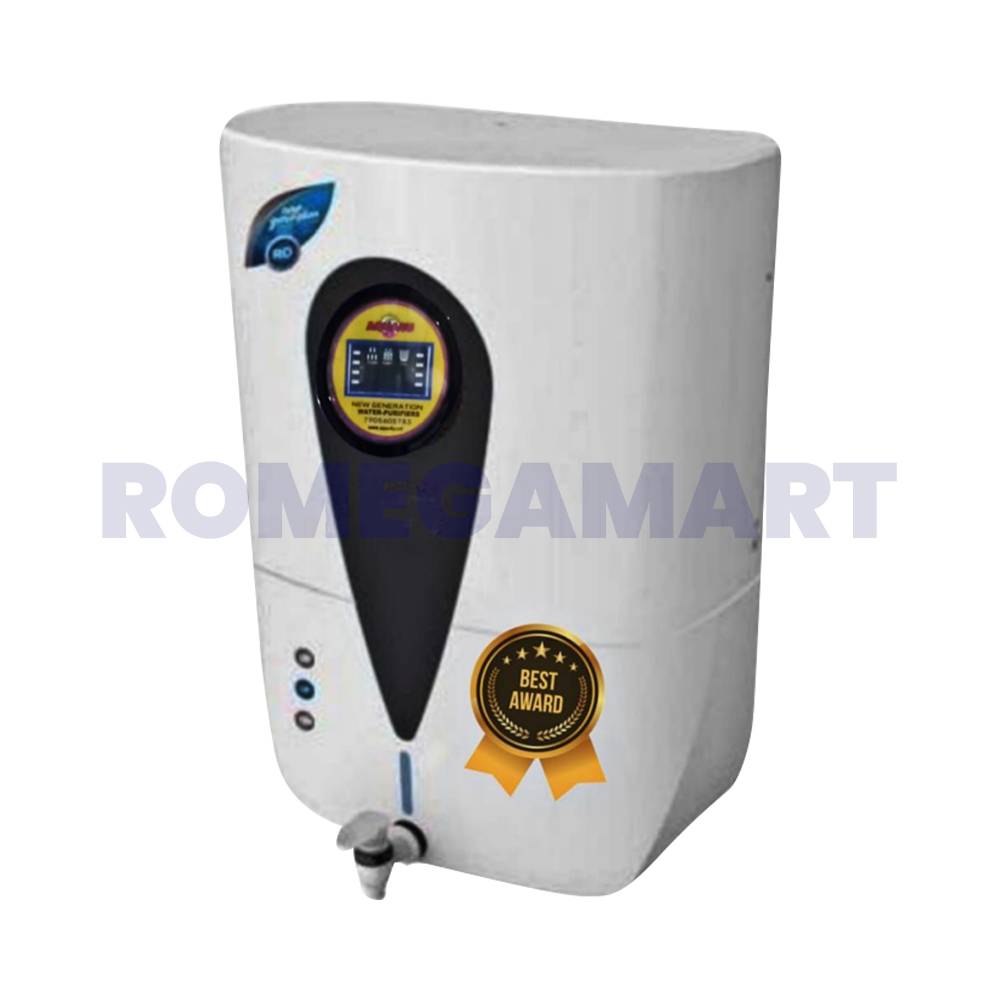


Choosing an RO water purifier is not just about selecting a popular model. The right purifier depends on your source water, dissolved impurities, daily water consumption, available installation space and maintenance requirements. A purifier suitable for one household may not be the right choice for an office, hotel or commercial facility.
RO Service & Sales helps customers explore water purifier categories and related solutions for different requirements. Whether you are looking for a conventional water purifier, an under-sink RO system or an RO UV water purifier, this page will help you understand the available options and what to consider before purchasing.
Explore the Under Sink RO category and Water Purifiers category to find a suitable product for your needs.
An RO water purifier uses reverse osmosis (RO), a membrane-based filtration process that reduces many dissolved salts and other impurities from water. Water passes through a semipermeable membrane under pressure, separating a portion of the dissolved substances from the treated water.
Depending on the model, an RO purifier may also include sediment filters, activated carbon filters, UV treatment or other stages. Each stage serves a different purpose, so the exact filtration process depends on the system's design.
An RO water purifier may be considered when the source water contains elevated dissolved solids or specific contaminants that the system is designed to reduce. However, no purifier should be selected based on TDS alone. Water quality testing helps determine which treatment technology is appropriate.
Different properties and water sources require different purification approaches. Understanding the available categories makes it easier to shortlist suitable products.
An under sink RO water purifier is installed beneath the kitchen sink, with treated water usually delivered through a separate faucet. It can be a practical choice for kitchens where users prefer to keep the main countertop clear.
Before choosing an under-sink model, check the cabinet dimensions, plumbing arrangement, drainage requirements, electrical supply if needed, and space available for filter replacement and servicing.
Explore the Under Sink RO water purifier range.
RO water purifiers are designed to treat water using reverse osmosis and may include additional filtration stages depending on the model. They can be suitable for households or other locations where source-water testing indicates that RO treatment is appropriate.
When comparing models, review the listed filtration stages, rated output, storage capacity if applicable, installation requirements, replacement-filter availability and maintenance instructions.
Browse the Water Purifiers category to explore the available options.
An RO UV water purifier combines reverse osmosis with ultraviolet treatment. RO and UV work differently: RO helps reduce many dissolved substances, while UV treatment is intended to inactivate susceptible microorganisms when operated under the system's specified conditions.
Whether a combined RO and UV system is necessary depends on the source water and the treatment requirements. Check the manufacturer's specifications rather than assuming that every model offers the same protection.
The best RO water purifier is the one that matches your water quality, usage and maintenance needs. Consider these factors before making a purchase.
Source-water quality: Identify whether the water comes from a borewell, tanker, municipal supply or another source. If necessary, arrange suitable water testing.
Treatment technology: Choose RO, UV, UF or a combination based on the contaminants that need to be addressed. Not every water source requires RO.
Daily consumption: Estimate how much drinking water your household, office or facility uses each day. Commercial applications may require a different capacity and system design.
Installation space: Check the available space, water inlet, drainage and electrical requirements before ordering.
Filter and membrane availability: Confirm that compatible replacement cartridges and membranes can be sourced when required.
Maintenance needs: Review cleaning, filter replacement and servicing instructions, along with the associated costs.
Product documentation: Compare the manufacturer's specifications, warranty terms and stated treatment capabilities.
For hotels, hospitals, offices and other commercial premises, selection should also account for peak demand, operating hours, water quality variation and the consequences of system downtime.
The RO water purifier price varies by product design and specifications. Since prices and stock can change, customers should check the current listing or request a quotation rather than rely on a generic price estimate.
Factors that may influence the price include:
Purification technology and the number of treatment stages.
Membrane and filter specifications.
Storage tank or dispensing arrangement, where applicable.
Rated output and intended application.
Installation requirements and any additional components.
Replacement-filter costs and long-term maintenance requirements.
For commercial or bulk purchases, confirm the required quantity, delivery terms, installation scope and applicable warranty conditions before placing an order. The lowest initial price may not represent the lowest overall ownership cost if replacement components are difficult to source or servicing requirements are higher.
RO-treated water can be appropriate for drinking when the system is correctly selected, installed and maintained for the source water. However, suitability depends on the incoming water quality and the performance of the complete treatment system.
RO can reduce many dissolved minerals along with unwanted substances. That is why it is important to assess the source water and the intended treatment outcome rather than choosing a purifier simply because it has RO technology.
For safe drinking water:
Test the source water when its quality is uncertain.
Use a purifier suited to the contaminants present.
Replace filters and membranes according to the manufacturer's guidance.
Clean and maintain the system as instructed.
Follow applicable drinking-water recommendations and use appropriate testing where needed.
If the water has unusual colour, taste or odour, or there is reason to suspect contamination, seek proper water testing instead of relying on a purifier label alone.
An RO water purifier needs periodic inspection and maintenance to perform as intended. Depending on the model, the system may contain sediment filters, carbon filters, an RO membrane, tubing, valves, a pump, electrical components and a storage tank.
Common maintenance considerations include:
Checking filters for replacement according to their rated life and actual water conditions.
Inspecting the membrane if water output or treatment performance changes.
Checking for leaks, unusual noise or changes in water flow.
Ensuring that tubing and connections remain secure.
Following the manufacturer's cleaning and sanitisation instructions.
Use compatible RO water purifier parts specified for the particular model. A filter or membrane that physically fits may still have unsuitable performance specifications. If the system produces less water than usual, leaks or shows other faults, have the cause assessed before replacing parts at random.
RO Service & Sales focuses on RO water purification products and related service requirements. Customers can explore the listed product categories and compare options according to their water source, installation space and intended usage.
Reasons to explore the platform include:
Category-based product discovery: Browse the available water purifier and under-sink RO categories.
Solutions for different requirements: Identify products for residential use and assess whether a different system is needed for commercial applications.
Maintenance awareness: Consider replacement parts, filter availability and future servicing before purchasing.
Related RO expertise: The business presents industrial and commercial RO plant installation, repair and maintenance among its service offerings.
For a suitable product recommendation, keep your source-water information and daily consumption requirements ready. Product-specific details, current prices, stock availability, warranty coverage and installation terms should be confirmed before purchase.
Looking for an RO water purifier for your home, office or another application? Start by reviewing the available product categories and comparing their specifications.
Explore Under Sink RO Water Purifiers for under-counter installation options.
Browse Water Purifiers to compare the products listed in that category.
Before ordering, confirm that the selected model is suitable for your water quality and daily demand. For commercial installations, check the required capacity and installation conditions with the supplier.
There is no single best RO water purifier for everyone. Compare the source-water quality, treatment technology, output, installation requirements, replacement-filter availability and maintenance costs. Choose a model that matches your actual needs rather than relying only on brand popularity.
Start with a water-quality test and confirm the level and nature of dissolved substances. Select a system whose documented operating range and membrane specifications match the water conditions. High TDS alone does not identify every contaminant or determine the complete treatment requirement.
RO uses a membrane to reduce many dissolved substances, while UV treatment is intended to inactivate susceptible microorganisms. An RO UV purifier combines both technologies. The most appropriate choice depends on the source-water quality and the treatment capabilities of the specific model.
The price depends on the model, filtration stages, membrane specifications, capacity, installation requirements and included components. Check the current product listing or request a quotation for an accurate price. Also consider replacement filters and servicing costs.
The correct cartridge depends on the purifier model, filter stage and manufacturer's specifications. Check the part number, dimensions and performance requirements before purchasing. Using an incompatible cartridge can affect the system's operation.
Reduced water flow, unusual noise, leakage, changes in water quality or a maintenance warning may indicate that inspection is needed. These symptoms can have different causes, so follow the manufacturer's troubleshooting instructions or arrange a qualified assessment.
No. The right treatment depends on the incoming water quality and the contaminants that need to be addressed. Testing the source water can help determine whether RO is appropriate or whether another purification method would be more suitable.
Choosing the right RO water purifier starts with understanding your water quality, daily consumption and installation requirements. Compare the available purifier types, review product specifications and consider replacement parts and servicing before making a decision.
RO Service & Sales provides product categories for customers exploring water purification options, including under-sink RO systems and water purifiers. Browse the relevant categories, verify the specifications and request current pricing where needed to find a solution that fits your requirements.

OTP Verified